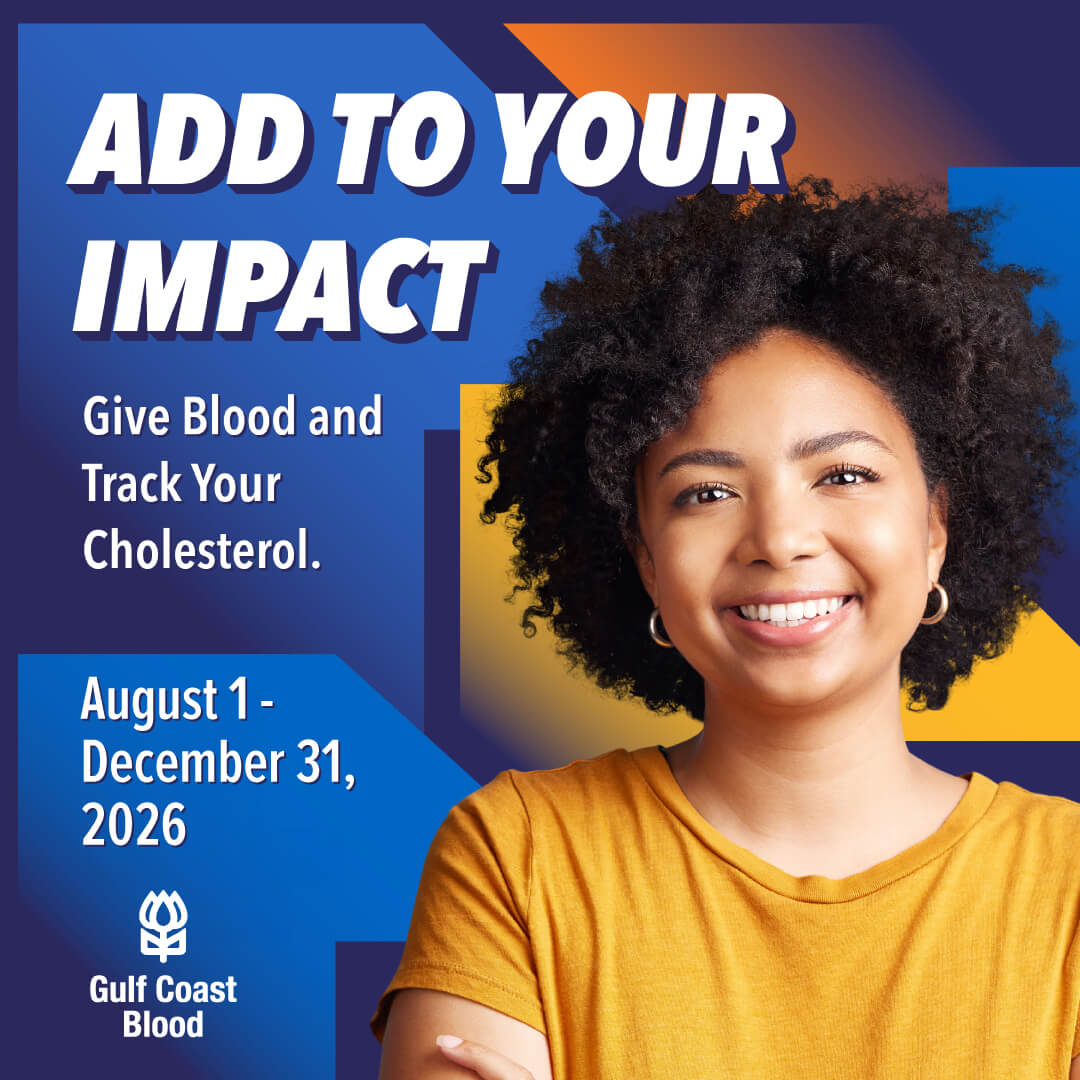
From August 1 through December 31, 2026, every donor who completes a successful blood donation will receive a free cholesterol screening.
A cholesterol screening measures your cholesterol and triglyceride levels, helping you better understand your heart health. High cholesterol often has no symptoms, so knowing your numbers can be an important first step.
This screening is not a diagnosis. Please review your results with your doctor or healthcare provider, especially if any number is outside the expected range.
What Your Cholesterol Screening May Include
Your cholesterol screening may show several numbers, including:
This is the overall amount of cholesterol in your blood. For many adults, a heart-healthy total cholesterol level is generally below 150 mg/dL.
LDL is often called “bad” cholesterol because too much of it can contribute to plaque buildup in the arteries. For many adults, an LDL level lower than 100 mg/dL is considered a healthy goal. Some people with heart disease or certain risk factors may need a different goal based on their healthcare provider’s guidance.
HDL is often called “good” cholesterol because it helps remove cholesterol your body does not need. Unlike LDL, higher HDL is usually better. In general, a healthy goal is 40 mg/dL or higher for men, 50 mg/dL or higher for women.
Triglycerides are another type of fat found in the blood. They are often measured as part of the cholesterol screening and can help provide a fuller picture of your heart health. For many adults, a Triglycerides level lower than 150 mg/dL is considered a healthy goal.
Some results may be listed as elevated, borderline high, high, or very high. Your results are for general wellness information only and do not diagnose a medical condition. Please review your results with your doctor or healthcare provider, especially if your numbers are outside the expected range or if you have questions.
Viewing Your Test Results:
Eating a balanced meal before donating blood helps you stay energized and prevents lightheadedness. While some medical tests require fasting, our cholesterol screening does not—so you can eat as usual before your donation. Stay nourished, hydrated, and ready to make a difference!
STEP 1: Donate Blood
Schedule your blood donation at any Gulf Coast Blood location.
STEP 2: Receive a Free Cholesterol Screening
From August 1 through December 31, 2026, every successful blood donation includes a free cholesterol screening.
STEP 3: View Your Results
Your cholesterol screening results will be available in your Digital Donor account within two weeks of your donation.
Important: This test is not a diagnosis. Please talk to your doctor or healthcare provider if your results are outside the expected range or if you have questions.
Frequently Asked Questions
Every donor who completes a successful blood donation with Gulf Coast Blood from August 1 through December 31, 2026, will receive a free cholesterol screening.
No. The cholesterol screening is included with every successful blood donation during the promotion period.
The cholesterol screening measures fats in your blood, including cholesterol and triglycerides. It may include total cholesterol, LDL, HDL, VLDL, and triglycerides.
Cholesterol numbers can provide general information about heart health. High cholesterol often has no symptoms, so knowing your numbers can be helpful.
Your results should be available in your Digital Donor account, under Test Results, within two weeks of your blood donation.
No. This screening does not diagnose medical conditions. It provides general wellness information only.
Please talk with your doctor or healthcare provider. They can explain what your results may mean based on your personal health history.
Gulf Coast Blood provides the cholesterol screening results but does not diagnose medical conditions or provide medical treatment recommendations. Please review your results with your healthcare provider.
Your cholesterol screening results are separate from standard blood donation eligibility requirements. If you have questions about donation eligibility, please check our eligibility page.